Here's why this convention is used:
* Consistency with other forces: In physics, forces are typically defined as vectors, meaning they have both magnitude and direction. If a force acts upwards, it's usually considered positive, and if it acts downwards, it's considered negative. This makes it easier to represent forces in equations and visualize their effects.
* Simplification of calculations: By choosing the upward direction as positive, the acceleration due to gravity (which acts downwards) becomes negative (-g). This makes it easier to use the equations of motion, which are derived based on the assumption of a constant acceleration.
Let's break it down:
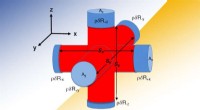
1. Choosing a coordinate system: We define a coordinate system where the upward direction is positive (usually along the y-axis).
2. Gravity's direction: Gravity acts downwards, which is the negative direction in our coordinate system.
3. Representing gravity: Therefore, the acceleration due to gravity (g) is represented as a negative value (-g).
Important Note: This convention of assigning negative values to downwards forces is purely based on our choice of coordinate system. The actual direction and magnitude of gravity remain the same regardless of the coordinate system.
In conclusion, it's not that gravitational force is negative, but rather it's represented as negative due to the chosen coordinate system. This convention simplifies calculations and makes it easier to analyze the motion of projectiles.