Here's a breakdown of what happens:
* Light travels at different speeds in different mediums: Light travels fastest in a vacuum, slower in air, and even slower in water or glass.
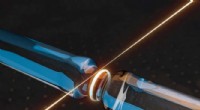
* Change in direction: When light moves from one medium to another (like air to water), it changes speed. This change in speed causes the light wave to bend, or refract.
* Angle of incidence and angle of refraction: The angle at which the light strikes the surface (the angle of incidence) and the angle at which it bends (the angle of refraction) are related. This relationship is described by Snell's Law.
Here are some examples of refraction:
* A straw in a glass of water: A straw appears to bend at the water's surface because the light coming from the straw refracts as it moves from the water into the air.
* A rainbow: Rainbows are formed by the refraction and reflection of sunlight through raindrops.
* Lenses in eyeglasses and cameras: Lenses are designed to refract light in specific ways to focus images.
Factors affecting refraction:
* The refractive index of the mediums: The refractive index is a measure of how much light slows down when it enters a particular medium. The larger the difference in refractive index between the two mediums, the more the light will bend.
* The angle of incidence: The larger the angle at which light hits the surface, the more it will bend.
Refraction is a fundamental phenomenon in optics and is responsible for many everyday occurrences. It is also crucial for technologies like microscopes, telescopes, and fiber optic cables.