1. Reflection:
* Specular Reflection: This is what happens when light bounces off a smooth surface like a mirror. The angle of incidence (the angle at which the light hits the surface) equals the angle of reflection. The reflection is sharp and clear.
* Diffuse Reflection: This occurs when light hits a rough surface like a piece of paper. The light scatters in many different directions, making the surface appear dull or matte.
2. Absorption:
* Opaque Objects: Some objects absorb all the light that hits them, which is why they appear black. They convert the light energy into other forms, like heat.
* Transparent Objects: Transparent objects, like glass, allow light to pass through them with minimal absorption. This is why you can see through them.
* Translucent Objects: Translucent objects, like frosted glass, allow some light to pass through, but they scatter it, so you can't see clearly through them.
3. Refraction:
* Bending Light: When light passes from one medium to another (like from air to water), it changes speed and direction. This is called refraction. This is why a straw in a glass of water appears bent.
* Dispersion: When white light passes through a prism, it is separated into its different colors (the rainbow). This is because different wavelengths of light refract at slightly different angles.
4. Diffraction:
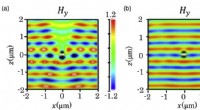
* Bending Around Corners: Light waves can bend around corners or small obstacles. This is called diffraction. This effect is more pronounced for light waves with shorter wavelengths (like blue light).
5. Scattering:
* Rayleigh Scattering: This occurs when light is scattered by particles much smaller than the wavelength of the light. It's why the sky appears blue – shorter wavelengths (blue light) are scattered more than longer wavelengths (red light).
* Mie Scattering: This occurs when light is scattered by particles that are comparable in size to the wavelength of the light. This is why clouds appear white or gray – they scatter all wavelengths of light equally.
In Summary:
Light's behavior when hitting an object is a combination of reflection, absorption, refraction, diffraction, and scattering. The specific interaction depends on the properties of the object and the light itself.