What Force *Does*
* Changes an object's motion: Force can cause an object to start moving, stop moving, change direction, or change speed.
* Deforms objects: Force can stretch, compress, bend, or twist objects.
How Force Arises
Force arises from interactions between objects, and these interactions can be categorized into two main types:
1. Contact Forces: These forces require direct physical contact between the objects. Examples include:
* Normal force: The force exerted by a surface on an object resting on it.
* Friction: The force that opposes motion between two surfaces in contact.
* Tension: The force transmitted through a rope or cable.
* Applied force: The force directly applied by a person or object.
2. Non-contact Forces: These forces act without direct contact. Examples include:
* Gravitational force: The force of attraction between any two objects with mass.
* Electromagnetic force: The force that governs interactions between electrically charged particles.
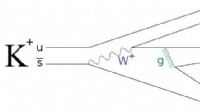
* Weak nuclear force: The force responsible for nuclear decay.
* Strong nuclear force: The force that binds protons and neutrons together in the nucleus of an atom.
Key Concepts
* Newton's Laws of Motion: These laws describe the relationship between force, mass, and acceleration.
* Vector Quantity: Force is a vector quantity, meaning it has both magnitude (strength) and direction.
In Summary
Force is a fundamental concept in physics that describes the interaction between objects. It's not something "made" but rather a way to describe how objects influence each other. Understanding force helps us explain motion, interactions between objects, and the behavior of the universe.