At the Atomic Level:
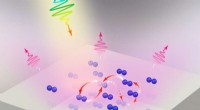
* Atoms: The building blocks of everything are in constant motion. Their electrons whiz around the nucleus in a cloud, and the nucleus itself vibrates.
* Molecules: These are groups of atoms bonded together. They move around and vibrate, especially in liquids and gases.
* Thermal Energy: Heat is a form of energy that causes matter to vibrate and move.
On Earth:
* Weather: Wind, rain, storms, and the movement of air and water are constantly changing.
* Earth's Rotation: Our planet spins on its axis, causing day and night.
* Earth's Revolution: We orbit the sun, leading to the seasons.
* Plate Tectonics: The Earth's crust is made up of giant plates that slowly move, causing earthquakes and volcanoes.
* Living Organisms: From the beating of your heart to the growth of plants, life itself is a constant process of motion.
* Rivers and Oceans: Water flows continuously, shaping landscapes and creating ecosystems.
In the Solar System and Beyond:
* Planets: All planets in our solar system are in motion, orbiting the sun.
* Moons: Most moons orbit their planets.
* Comets and Asteroids: These celestial objects move through space, sometimes crossing paths with Earth.
* Stars: Stars are not static. They rotate, move within their galaxies, and even have their own internal motion.
* Galaxies: Galaxies, like our Milky Way, are constantly moving and interacting with each other.
The Universal Nature of Motion:
* Einstein's Relativity: This theory shows that even space and time are not fixed, but are relative to an observer's motion.
* Expansion of the Universe: The fabric of space itself is expanding, causing galaxies to move further apart.
Key Concepts to Remember:
* Motion is relative: Something can be in motion relative to one object but stationary relative to another.
* Motion is continuous: There is no such thing as true stillness. Even objects that appear stationary are actually in motion at the atomic level.
* Motion is governed by laws: Newton's laws of motion and Einstein's theory of relativity help us understand how things move.
So, what seems like stillness is actually a symphony of motion at every level of existence!