Here's why:
* Air resistance: In the presence of air, objects experience air resistance, a force that opposes their motion. The amount of air resistance an object experiences depends on its shape, size, and speed. For example, a feather experiences much more air resistance than a bowling ball.
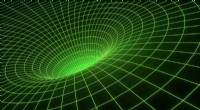
* Mass and gravity: While gravity pulls on all objects equally, the acceleration due to gravity is constant, meaning all objects fall at the same rate in a vacuum. However, the force of gravity is proportional to mass. This means heavier objects have a stronger gravitational force acting on them, but they also have more inertia (resistance to change in motion). These two factors cancel each other out, resulting in the same acceleration.
In conclusion:
* In a vacuum: Everything falls at the same speed.
* In air: Objects with more air resistance will fall slower than objects with less air resistance, even if they have the same mass.
A classic example of this is the feather and hammer experiment conducted by Apollo 15 astronaut David Scott on the Moon. In the absence of air, both objects fell at the same rate and landed simultaneously.