Electronics and Computing:
* Semiconductors: The very foundation of modern electronics relies on the understanding of solid-state physics and the behavior of electrons in semiconductors.
* Microprocessors: Physics dictates how transistors operate, allowing for the miniaturization of circuits and the incredible processing power we have today.
* Lasers: The principles of quantum mechanics and optics are essential for the development and operation of lasers, used in everything from barcode scanners to medical surgery.
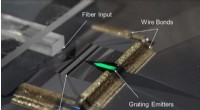
* Optical Fibers: Understanding the principles of light propagation and wave interference allows for the efficient transmission of data through optical fibers.
* Magnetic Storage Devices: Hard drives and magnetic tapes rely on the principles of magnetism to store and retrieve data.
Energy and Power:
* Nuclear Power Plants: The harnessing of nuclear energy involves understanding nuclear physics and the principles of radioactive decay.
* Solar Power: The generation of electricity from sunlight depends on the principles of electromagnetism and photovoltaics.
* Wind Power: Understanding fluid dynamics and aerodynamics is essential for designing efficient wind turbines.
* Hydroelectric Power: The principles of fluid mechanics and gravitational potential energy are used in the design and operation of hydroelectric dams.
Transportation:
* Cars: From the internal combustion engine to the electric motors in electric vehicles, physics is crucial in understanding the mechanics of motion and energy conversion.
* Airplanes: Aerodynamics, fluid dynamics, and principles of lift and drag are essential for aircraft design and flight.
* Space Exploration: Understanding the principles of orbital mechanics, rocket propulsion, and astrophysics are fundamental to space travel.
Medicine and Health:
* Medical Imaging: X-ray machines, CT scans, and MRI machines all rely on the principles of electromagnetic radiation and its interaction with matter.
* Radiation Therapy: Understanding the physics of radiation is essential for treating cancer with radiation therapy.
* Laser Surgery: Lasers are used in a variety of medical procedures, from eye surgery to treating skin conditions.
* Prosthetics: Physics plays a role in designing prosthetics that mimic the movement and function of human limbs.
Communication:
* Radio and Television: The transmission and reception of radio and television signals are based on the principles of electromagnetic waves.
* Cellular Phones: Cellular communication relies on the principles of electromagnetism and wave propagation.
* Internet: The transfer of data over the internet is facilitated by understanding the principles of light propagation and fiber optics.
Beyond these examples, physics underpins many other technologies, including:
* Materials Science: Understanding the properties of materials at the atomic level allows for the development of new and improved materials.
* Nanotechnology: Physics is crucial for understanding and manipulating matter at the nanoscale.
* Robotics: The design and control of robots relies on principles of mechanics, kinematics, and control systems.
In essence, physics provides the fundamental knowledge that enables technological advancements across a vast array of fields. Without it, our modern world would look vastly different.