1. Periodic Motion:
* Cycle: In this context, a cycle refers to one complete repetition of a periodic motion. This could be:
* Oscillation: A repetitive back-and-forth motion, like a pendulum swinging or a spring bouncing.
* Rotation: A complete turn of an object around a fixed axis, like a spinning wheel.
* Wave motion: A repeating pattern of disturbances that travel through a medium, like sound waves or light waves.
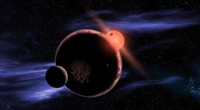
* Orbital motion: The complete path of an object as it revolves around another object, like a planet orbiting a star.
* Period: The time it takes for one complete cycle to occur.
* Frequency: The number of cycles that occur in a given time period (usually one second).
2. Thermodynamic Cycles:
* Thermodynamic cycle: A series of processes that returns a system to its initial state, while transferring heat and work.
* Carnot cycle: A theoretical thermodynamic cycle that achieves the maximum possible efficiency for converting heat into work.
* Otto cycle: A thermodynamic cycle used in gasoline engines.
* Diesel cycle: A thermodynamic cycle used in diesel engines.
3. Other Uses:
* Cycle of matter: The continuous movement of matter through various forms in an ecosystem, such as the water cycle or the carbon cycle.
* Life cycle: The series of stages that an organism goes through during its lifetime, from birth to death.
* Particle physics: Some particles, like the Higgs boson, are thought to have a cycle of creation and annihilation.
To understand the meaning of "cycle" in a specific context, it is important to consider the context and the specific field of physics being discussed.