1. Fundamental Forces:
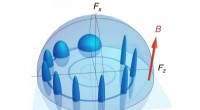
* Gravitational Force: This is the force of attraction between any two objects with mass. It's often shown as a downward-pointing arrow representing the force of gravity acting on an object near the Earth's surface.
* Electromagnetic Force: This force governs the interaction of charged particles and is responsible for phenomena like electricity, magnetism, and light. It's often represented by electric field lines or magnetic field lines, depending on the context.
* Weak Nuclear Force: This force is responsible for radioactive decay. It's less commonly shown in diagrams, but might appear in representations of nuclear reactions.
* Strong Nuclear Force: This force holds protons and neutrons together within the nucleus of an atom. Its representation is more complex and often involves the exchange of particles.
2. Contact Forces:
* Normal Force: This is the force exerted by a surface on an object in contact with it. It acts perpendicular to the surface and prevents the object from passing through it.
* Friction Force: This force opposes the motion of an object relative to a surface. It acts parallel to the surface and can be static (when the object is at rest) or kinetic (when the object is in motion).
* Tension Force: This is the force exerted by a string, rope, or cable when pulled taut. It acts along the direction of the string.
* Applied Force: This is a force exerted on an object by a person or another object. Its direction is determined by the direction of the applied force.
3. Other Forces:
* Buoyancy Force: This is the upward force exerted on an object submerged in a fluid. It's often represented by a single upward arrow.
* Air Resistance Force: This force opposes the motion of an object through air. It's often shown as an arrow pointing in the opposite direction to the object's motion.
* Spring Force: This is the force exerted by a spring when it's stretched or compressed. It's often represented by a vector pointing in the direction of the spring's restoring force.
Note: The specific forces represented in a diagram depend heavily on the context:
* Physics Diagrams: Will often focus on fundamental forces and contact forces.
* Engineering Diagrams: Might include forces like tension, compression, shear, and bending forces.
* Biology Diagrams: Might showcase forces related to muscle contraction, cell movement, or fluid flow.
When interpreting a diagram, it's crucial to pay attention to the context and identify the specific forces involved.