Solid to Liquid (Melting):
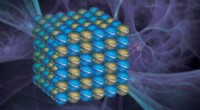
* Particle arrangement: Particles in a solid are tightly packed and vibrate in fixed positions.
* Particle movement: They have low kinetic energy.
* Melting: When heat is added, the particles gain kinetic energy and vibrate faster. They overcome the attractive forces holding them in a fixed position and start to move around each other. This results in a more disordered arrangement, characteristic of a liquid.
Liquid to Gas (Boiling/Evaporation):
* Particle arrangement: Particles in a liquid are close together but can move around freely.
* Particle movement: They have higher kinetic energy than solids.
* Boiling/Evaporation: Further heating gives the particles enough energy to overcome the attractive forces completely and escape into the gas phase. They move freely and are far apart.
Gas to Liquid (Condensation):
* Particle arrangement: Gas particles are far apart and move randomly.
* Particle movement: They have high kinetic energy.
* Condensation: When the gas cools, the particles lose kinetic energy. This reduces their speed and allows the attractive forces to pull them closer together, forming a liquid.
Liquid to Solid (Freezing):
* Particle arrangement: Liquid particles are close together but can move around.
* Particle movement: They have a moderate level of kinetic energy.
* Freezing: Removing heat from the liquid slows down the particles. The attractive forces pull them into a more ordered, fixed position, forming a solid.
Important Note:
* Phase changes are physical changes, meaning the element's chemical composition remains the same. Only the arrangement and movement of its particles change.
* Heat plays a crucial role in phase changes. Adding heat increases kinetic energy and promotes changes from solid to liquid or liquid to gas. Removing heat decreases kinetic energy and promotes changes from gas to liquid or liquid to solid.