1. A Wave: Diffraction is a phenomenon specific to waves. It applies to all types of waves, including light waves, sound waves, water waves, and even matter waves (like electrons).
2. An Obstacle or Opening: The wave needs something to interact with. This could be:
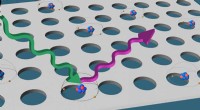
* A barrier with a narrow opening: The wave bends around the edges of the opening, spreading out into the region behind the barrier.
* A sharp edge: The wave bends around the edge of the obstacle, creating a pattern of light and dark areas.
* A periodic structure (like a diffraction grating): This creates multiple interference patterns, resulting in a more complex diffraction pattern.
3. Size Comparable to Wavelength: For diffraction to be significant, the size of the obstacle or opening must be comparable to or smaller than the wavelength of the wave.
* If the obstacle is much larger than the wavelength: The wave will essentially travel in a straight line and not diffract significantly.
* If the obstacle is much smaller than the wavelength: The wave will diffract significantly, but the pattern might be difficult to observe.
In simpler terms: Imagine a water wave traveling towards a small opening in a barrier. The wave will bend around the edges of the opening and spread out into the region behind the barrier. This bending and spreading of the wave is diffraction.
Why is this important? Diffraction plays a vital role in many areas of science and technology, including:
* Optical Instruments: Diffraction limits the resolution of microscopes and telescopes.
* Holography: Diffraction is the basis for recording and reconstructing three-dimensional images.
* X-ray Diffraction: Used to determine the structure of crystals and molecules.
* Communication Systems: Diffraction affects the propagation of radio waves and other electromagnetic waves.