Here's how the speed of light is affected by different mediums:
* Vacuum: Light travels at its fastest speed in a vacuum, as there are no particles to interact with.
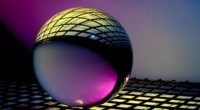
* Transparent Medium: When light enters a transparent medium like glass or water, it slows down. This is because the light interacts with the atoms of the medium, causing it to change direction and speed. The extent of this change depends on the refractive index of the medium.
* Opaque Medium: Light cannot travel through opaque mediums like metal because it is absorbed by the electrons in the material.
Factors affecting the speed of light in a medium:
* Refractive index: This is a measure of how much a medium slows down light. Higher refractive index means slower speed of light.
* Density: Denser mediums have more particles, which leads to more interactions with light and thus a slower speed.
* Wavelength: Different wavelengths of light travel at slightly different speeds in the same medium, a phenomenon known as dispersion. This is why a prism can separate white light into its constituent colors.
Important Note: While the speed of light in a medium can be slowed down, the speed of light in a vacuum remains constant. This is a fundamental law of physics.
Let me know if you have any more questions about light and its behavior!