* Air Resistance: As an object falls through the air, it experiences air resistance, also known as drag. This force opposes the object's motion, slowing it down.
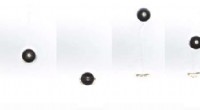
* Terminal Velocity: At a certain point, the force of air resistance becomes equal to the force of gravity pulling the object down. This balance of forces results in a constant speed called terminal velocity. The object will no longer accelerate, and its speed remains relatively constant until it hits the ground.
Factors Affecting Terminal Velocity:
* Shape: Objects with larger surface areas and less streamlined shapes experience more air resistance, resulting in lower terminal velocities.
* Mass: Heavier objects have greater gravitational force acting on them, leading to higher terminal velocities.
* Density of Air: Thicker air (like at higher altitudes) creates more resistance, reducing terminal velocity.
Important Note: While an object reaches a constant speed at terminal velocity, it's not always a slow speed. Terminal velocity can be quite high depending on the factors mentioned above. For example, a skydiver's terminal velocity is around 120 mph.