* Energy Dispersal: Waves carry energy. As a wave travels outward, that energy spreads out over a larger and larger area. This spreading causes the energy density (energy per unit area) to decrease, which in turn reduces the amplitude.
* Absorption and Scattering: The medium through which the wave travels can absorb some of the wave's energy. Additionally, the wave can scatter off particles or obstacles in the medium, further reducing its amplitude.
However, there are some exceptions:
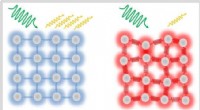
* Focused Waves: Waves can be focused, meaning their energy is concentrated in a smaller area. This can actually increase the amplitude as the wave travels.
* Waves in Resonant Systems: In certain systems, like musical instruments, waves can be amplified due to resonance. The resonant frequency of the system enhances the wave's amplitude.
In general, though, you can expect the amplitude of a wave to decrease as it moves away from its source due to energy dispersal and the effects of the medium.