Coulomb's Law in a Vacuum
The fundamental relationship for Coulomb's force between two point charges in a vacuum is:
* F = k * (q1 * q2) / r²
Where:
* F is the force (in Newtons, N)
* k is Coulomb's constant (approximately 8.98755 × 10⁹ N⋅m²/C²)
* q1 and q2 are the magnitudes of the two charges (in Coulombs, C)
* r is the distance between the charges (in meters, m)
The Influence of Dielectric Materials
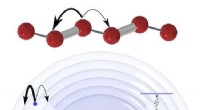
When you place charges in different dielectric materials (insulators), the force between them changes due to a phenomenon called polarization. Here's how it works:
1. Polarization: The electric field created by the charges causes the molecules of the dielectric material to align. This alignment creates an opposing electric field within the material.
2. Reduced Force: The opposing electric field from the polarized dielectric partially cancels out the original electric field from the charges. This results in a *reduced* force between the charges.
The Dielectric Constant (κ)
The extent to which a dielectric material reduces the force between charges is quantified by its dielectric constant (κ). A higher dielectric constant means the force is reduced more significantly.
* κ = 1 for a vacuum
* κ > 1 for all other materials (e.g., water has a κ of around 80)
Modifying Coulomb's Law for Dielectric Materials
To account for the dielectric material, we modify Coulomb's law:
* F = (k / κ) * (q1 * q2) / r²
Example
Imagine you have two charges, q1 and q2, separated by a distance r in a vacuum. Now you place them in a material with a dielectric constant of κ = 4. The force between them will be reduced to one-fourth of its original value.
Important Notes
* Different Dielectric Constants: If the charges are in different materials with different dielectric constants, you'll need to consider the effective dielectric constant of the medium between the charges.
* More Complex Situations: For more complex scenarios (charges in different shaped materials, etc.), you might need to use more advanced techniques like solving for the electric field distribution within the materials.
Let me know if you'd like a more specific example or have further questions!