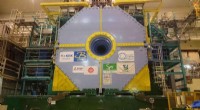
Physics is a vast and interconnected field, encompassing the study of matter, energy, space, and time. To navigate this complex landscape, it's often divided into several major branches, each with its own subfields:
1. Classical Physics:
* Mechanics: The study of motion and its causes, including:
* Kinematics: The study of motion without considering the forces that cause it.
* Dynamics: The study of motion with the forces that cause it.
* Statics: The study of objects at rest or in equilibrium.
* Thermodynamics: The study of heat and its relation to other forms of energy.
* Statistical Mechanics: The study of the behavior of systems with many particles.
* Thermochemistry: The study of the heat changes associated with chemical reactions.
* Electromagnetism: The study of the interplay between electric and magnetic fields.
* Electricity: The study of electric charges and their interactions.
* Magnetism: The study of magnetic fields and their effects on materials.
* Electrodynamics: The study of the interactions between electric and magnetic fields.
* Optics: The study of light and its behavior.
* Geometric Optics: The study of light rays and their interactions with mirrors and lenses.
* Wave Optics: The study of the wave nature of light.
* Quantum Optics: The study of the interaction of light with matter at the atomic and subatomic level.
* Acoustics: The study of sound and its behavior.
2. Modern Physics:
* Relativity: The study of space, time, and gravity.
* Special Relativity: The theory of the relationship between space and time.
* General Relativity: The theory of gravity as a curvature of spacetime.
* Quantum Mechanics: The study of the behavior of matter at the atomic and subatomic level.
* Atomic Physics: The study of the structure and properties of atoms.
* Nuclear Physics: The study of the structure and properties of atomic nuclei.
* Particle Physics: The study of the fundamental particles and forces that govern their interactions.
* Astrophysics: The study of celestial objects and phenomena.
* Cosmology: The study of the origin, evolution, and structure of the universe.
* Stellar Astrophysics: The study of stars and their properties.
* Galactic Astronomy: The study of galaxies and their interactions.
* Condensed Matter Physics: The study of the properties of materials in their condensed phases (solid and liquid).
* Solid State Physics: The study of the properties of solids.
* Liquid State Physics: The study of the properties of liquids.
* Soft Condensed Matter Physics: The study of materials that exhibit both solid-like and liquid-like properties.
* Plasma Physics: The study of the fourth state of matter, plasma.
3. Interdisciplinary Fields:
* Biophysics: The study of the physical principles underlying biological systems.
* Chemical Physics: The study of the physical principles governing chemical phenomena.
* Geophysics: The study of the physical properties and processes of the Earth.
* Atmospheric Physics: The study of the physical processes in the Earth's atmosphere.
* Medical Physics: The application of physics principles to medical diagnosis and treatment.
4. Emerging Fields:
* Nanophysics: The study of the physical properties of materials at the nanoscale.
* Quantum Information Science: The study of the use of quantum phenomena for information processing and communication.
* Astroparticle Physics: The study of the interaction of particles with cosmic rays and other high-energy phenomena.
* String Theory: A theoretical framework that attempts to unify all the forces of nature.
This list is not exhaustive, and many other subfields and specializations exist within physics. However, it provides a good overview of the major branches and subfields that constitute this fascinating and ever-evolving field.