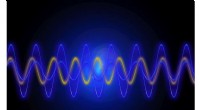
* Spatial Coherence: All points within the beam are in phase with each other. This means the light waves at different points within the beam are oscillating in unison, with their peaks and troughs aligned.
* Temporal Coherence: The light waves maintain a constant phase relationship over time. This means the waves don't randomly change their phase relationship over short intervals, resulting in a consistent frequency.
Why is Coherence Important?
Coherence is crucial for many applications because it allows for:
* Interference: Coherent beams can interfere with each other, creating patterns of constructive and destructive interference. This is fundamental to technologies like holography, interferometry, and laser-based microscopy.
* Directionality: Coherent beams tend to be highly directional and can be focused into narrow beams. This is key for applications like laser cutting, laser surgery, and optical communications.
* High Intensity: Because the waves are in phase, their amplitudes add constructively, leading to a high intensity beam. This is important for applications that require high energy density, like laser cutting and welding.
Examples of Coherent Beams:
* Laser light: Lasers are the prime example of coherent light sources. They produce beams with both high spatial and temporal coherence.
* Synchrotron radiation: This high-energy electromagnetic radiation produced by charged particles moving at relativistic speeds also exhibits coherence.
Non-Coherent Beams:
Most light sources, like incandescent bulbs or the sun, are not coherent. Their light waves are emitted randomly, leading to a lack of both spatial and temporal coherence.
In Summary:
Coherent beams are highly ordered and synchronized light beams, crucial for a wide range of applications where precise control over the light's properties is necessary.