Solids:
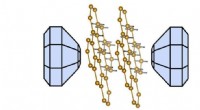
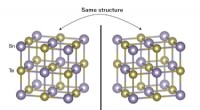
* Strong Intermolecular Forces: Particles in solids are held together by strong intermolecular forces (like ionic bonds, covalent bonds, or metallic bonds). These forces keep the particles tightly packed in a rigid, fixed lattice structure.
* Limited Motion: Particles in solids can only vibrate slightly about their fixed positions. They cannot move freely from one location to another within the solid.
* Fixed Shape and Volume: Due to the fixed positions of particles, solids maintain a fixed shape and volume. They are incompressible.
Liquids:
* Weaker Intermolecular Forces: Particles in liquids have weaker intermolecular forces than solids. These forces allow particles to move around more freely.
* Fluid Motion: Particles in liquids can move past each other and slide around, giving liquids their fluidity. They have more translational freedom than particles in solids.
* Variable Shape, Fixed Volume: Liquids take the shape of their container but maintain a relatively fixed volume. They are slightly compressible.
Here's an analogy:
Imagine a crowd of people at a concert. The people in the audience are like particles in a solid. They are tightly packed and can only move slightly. Now imagine those people in a crowded hallway. They are still close together, but they can move around more freely, like particles in a liquid.
In summary:
| Feature | Solid | Liquid |
|---|---|---|
| Intermolecular forces | Strong | Weaker |
| Particle Motion | Vibrate in place | Free movement, slide past each other |
| Shape | Fixed | Takes shape of container |
| Volume | Fixed | Relatively fixed |
| Compressibility | Incompressible | Slightly compressible |
This difference in particle motion explains why solids maintain their shape and liquids flow.