Here's a breakdown:
His main areas of research:
* Special Relativity: This theory revolutionized our understanding of space, time, and gravity. It predicted phenomena like time dilation and length contraction.
* General Relativity: This theory extended special relativity to include gravity, explaining its effects on spacetime. It predicted the bending of light around massive objects and the existence of black holes.
* Photoelectric Effect: He explained the photoelectric effect, which demonstrated the particle nature of light (photons) and earned him the Nobel Prize in Physics.
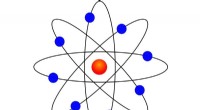
* Brownian Motion: He provided a mathematical explanation for the random motion of particles suspended in a fluid, providing strong evidence for the existence of atoms.
His work relied heavily on:
* Thought experiments: He would envision scenarios in his mind to explore the implications of his theories.
* Mathematics: He used complex mathematical equations to describe his theories and make predictions.
* Collaboration with other scientists: He discussed his ideas with fellow physicists and mathematicians.
While Einstein didn't perform experiments in a lab, his groundbreaking theories laid the foundation for many subsequent experimental breakthroughs.