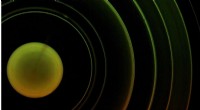
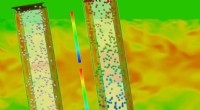
* Mechanical waves: These waves require a medium (like water, air, or a solid) to travel. The particles of this medium oscillate or vibrate around their equilibrium positions.
* Particle motion: The particles don't travel long distances with the wave. They just move back and forth, transferring energy from one particle to the next.
* Wave motion: The wave itself is the disturbance that travels through the medium, not the individual particles.
Example: Think of a ripple on a pond. The water molecules don't travel across the pond with the ripple; they just move up and down, transferring energy to the next molecule. It's the disturbance that travels.
Important Note: This differs from electromagnetic waves like light, which can travel through a vacuum. Electromagnetic waves don't require a medium and are made up of oscillating electric and magnetic fields.