* Light travels fastest in a vacuum, which is the speed of light, denoted as 'c' (approximately 299,792,458 meters per second).
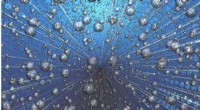
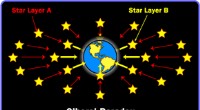
* When light enters a medium like glass or water, it slows down. This is because light interacts with the atoms and molecules of the medium, causing it to change direction and slightly delay its path.
* The degree of slowing down depends on the refractive index of the medium. The refractive index is a measure of how much the speed of light changes when it enters a medium. A higher refractive index means a greater slowing down of light.
Here's a simple analogy:
Imagine light as a car driving on a straight road (vacuum). Now, imagine that road suddenly turns into a crowded street (medium). The car has to slow down to navigate the crowded space, taking a longer time to reach its destination.
Key points:
* Light's *frequency* (number of waves per second) remains constant when entering a new medium.
* Light's *wavelength* changes as its speed changes, resulting in a change in color if the light is white. This is why a straw appears to bend when placed in a glass of water.
In summary, light slows down when entering a new medium due to interactions with the medium's particles, and the amount of slowing down depends on the refractive index of the medium.