1. Visualizations:
* Lines of force: This is the most common way to visualize a force field. It uses lines to represent the direction of the force at different points in space. For example, you've probably seen diagrams of magnetic field lines around a magnet.
* Contour plots: These show the strength of the force at different locations. Think of it like a topographic map, where the lines represent different levels of force.
* 3D models: You can use software to create 3D models of force fields. These models can show the direction and strength of the force in a more realistic way.
2. Examples in the real world:
* Gravity: This is the force that attracts objects with mass towards each other. You can't see gravity, but you can see its effects, like objects falling to the ground.
* Magnetism: This force affects moving electric charges. You can see the effects of magnetism with a compass, which aligns itself with the Earth's magnetic field.
* Electric field: This is the force that exists around charged objects. You can't see it directly, but you can see its effects, like sparks jumping between two charged objects.
3. In fiction:
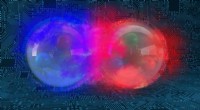
* Sci-fi movies: Force fields in movies are often depicted as glowing barriers that can deflect energy and objects. This is not scientifically accurate, but it's a popular way to represent the idea of an invisible force field.
In short, a force field itself is invisible. We represent it through visualizations, real-world examples, and fictional depictions. It's important to remember that it's not a physical barrier, but rather a region of space where a force acts.