Energy cannot be created or destroyed, only transferred or transformed.
Here's a breakdown of what this means:
* Energy: This refers to the ability to do work. It comes in many forms, including heat, light, chemical energy, mechanical energy, and more.
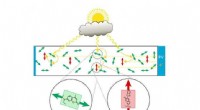
* Transferred: Energy can move from one object or system to another. For example, the sun transfers energy to the Earth through radiation.
* Transformed: Energy can change from one form to another. For example, chemical energy in fuel is transformed into mechanical energy to power a car.
In simpler terms: The first law of thermodynamics states that the total amount of energy in the universe remains constant. You can't get something from nothing, and you can't make something disappear entirely. You can only change its form or move it around.
Examples:
* Burning fuel: The chemical energy stored in fuel is transformed into heat and light energy.
* Hydroelectric dam: The potential energy of water stored at a high elevation is transformed into kinetic energy as it flows downward, then into electrical energy by a turbine.
* Solar panel: Light energy from the sun is transformed into electrical energy.
The first law of thermodynamics is a fundamental principle in physics and has wide-ranging implications in various fields, including engineering, chemistry, and biology.