Common Meanings:
* Principal quantum number: In atomic physics, "n" represents the principal quantum number, which describes the electron's energy level. Higher values of "n" correspond to higher energy levels.
* Number of objects: In many situations, "n" can simply represent the number of objects or particles. For example, "n" could represent the number of atoms in a molecule, the number of charges in a system, or the number of particles in a gas.
* Refractive index: In optics, "n" is used to represent the refractive index of a medium, which determines how light bends when passing through it.
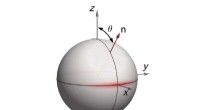
* Normal force: "n" can also stand for the normal force, which is the force exerted by a surface perpendicular to an object in contact with it.
Other Meanings:
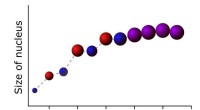
* Neutron: In nuclear physics, "n" can represent a neutron, which is a subatomic particle found in the nucleus of an atom.
* Newton (unit of force): "N" is the standard abbreviation for Newton, the SI unit of force.
* Quantum number: While "n" is the most common quantum number, other letters can be used to represent different quantum numbers, such as "l", "m", and "s".
To understand the meaning of "n" in a specific context, it's important to pay attention to the surrounding text and the subject being discussed.
If you are unsure of the meaning, always refer to the definitions and explanations provided in the specific textbook or research paper you are reading.