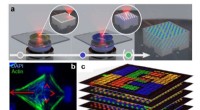
Theoretical Tools:
* Mathematics: Physics is fundamentally a mathematical science. Physicists use various branches of math like calculus, linear algebra, differential equations, and more to describe and model physical phenomena.
* Computer simulations: These allow physicists to study complex systems that are difficult or impossible to analyze purely mathematically. They can simulate everything from the formation of stars to the behavior of particles in a collider.
* Theoretical frameworks: Physicists work within established theoretical frameworks like classical mechanics, quantum mechanics, relativity, and statistical mechanics to explain observations and make predictions.
Experimental Tools:
* Laboratory equipment: Physicists use a vast array of instruments for precise measurements, including:
* Microscopes: For observing incredibly small objects, including atoms and molecules.
* Telescopes: For studying celestial objects and distant galaxies.
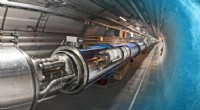
* Particle accelerators: To accelerate particles to high energies and study their interactions.
* Spectrometers: To analyze light and other forms of radiation emitted by objects.
* Lasers: For precise measurements, manipulating materials, and generating ultra-short pulses.
* Sensors: For detecting various physical quantities like temperature, pressure, and magnetic fields.
* Data analysis tools: Physicists collect massive amounts of data from experiments, which they analyze using specialized software and statistical methods to extract meaningful results.
* Computing power: From high-performance computing clusters to powerful laptops, computational resources are crucial for simulating experiments, analyzing data, and developing new theoretical models.
Other Essential Tools:
* Collaboration: Physics research often involves large teams of scientists working together. Communication and collaboration are key to success.
* Critical thinking: Physicists must be able to think critically, evaluate evidence, and develop new ideas.
* Creativity: Physics requires imagination and the ability to think outside the box to come up with new explanations and solutions.
The specific tools used by a physicist depend on their area of expertise. For example, a particle physicist might use a particle accelerator and sophisticated detectors, while an astrophysicist might rely on telescopes and data analysis software. But ultimately, all physicists rely on a combination of theoretical and experimental tools to advance our understanding of the universe.