Understanding the Concepts
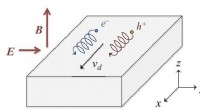
* Electric Field: An electric field is a region around a charged object where other charged objects experience a force. The strength of the electric field is represented by the electric field strength (E).
* Electric Field Due to a Point Charge: The electric field strength at a distance 'r' from a point charge 'q' is given by:
E = k * q / r²
where 'k' is Coulomb's constant (approximately 8.99 x 10^9 N m²/C²).
* Superposition Principle: The electric field at a point due to multiple charges is the vector sum of the electric fields due to each individual charge.
Scenario: Two Charges
Let's consider two charges, q1 and q2, separated by a distance 'd'. We want to find the electric field strength at the midpoint between them.
Steps
1. Distances: The distance from each charge to the midpoint is d/2.
2. Electric Fields due to Individual Charges:
* The electric field due to q1 at the midpoint is:
E1 = k * q1 / (d/2)² = 4k * q1 / d²
* The electric field due to q2 at the midpoint is:
E2 = k * q2 / (d/2)² = 4k * q2 / d²
3. Vector Sum:
* If the charges have the same sign (both positive or both negative), the electric fields point in opposite directions, and the net electric field is the difference:
E_net = E1 - E2 = 4k/d² * (q1 - q2)
* If the charges have opposite signs, the electric fields point in the same direction, and the net electric field is the sum:
E_net = E1 + E2 = 4k/d² * (q1 + q2)
Important Notes
* The electric field strength is a vector quantity, meaning it has both magnitude and direction. The direction of the net electric field depends on the signs of the charges and the relative magnitudes of their electric fields.
* If q1 = q2, then the net electric field at the midpoint is zero when the charges have opposite signs.
* If q1 = -q2, then the net electric field at the midpoint is zero regardless of the sign of the charges.
Let me know if you'd like to work through a specific example with values for the charges and distance!