Solid
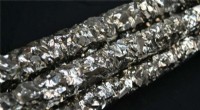
* Particle motion: Particles are tightly packed and vibrate in fixed positions. They have very limited movement, only able to vibrate slightly around their fixed points.
* Structure: Highly ordered, with a regular, repeating arrangement.
* Example: Ice, rock, diamond
Liquid
* Particle motion: Particles are closely packed but can move around each other. They have more freedom to move and are constantly bumping into each other, resulting in fluid-like behavior.
* Structure: Less ordered than solids, but still with some degree of attraction between particles.
* Example: Water, oil, mercury
Gas
* Particle motion: Particles are widely spaced and move freely and rapidly in all directions. They collide with each other and the walls of their container.
* Structure: No fixed arrangement, particles are far apart and move independently.
* Example: Air, helium, steam
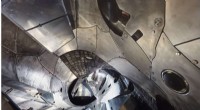
Plasma
* Particle motion: Similar to gas, but particles are ionized (they have lost or gained electrons). This means they have a net electric charge.
* Structure: Highly energetic and can be influenced by electric and magnetic fields.
* Example: The Sun, lightning, fluorescent lights
Key Differences:
* Spacing: Particles in solids are closest together, followed by liquids, then gases. Plasma particles are even more spaced out.
* Motion: Particles in solids have the least freedom of motion, while particles in gases have the most. Plasma particles move very rapidly and are influenced by electric and magnetic fields.
* Structure: Solids have the most ordered structure, while gases have the least. Liquids fall somewhere in between.
Important Note: The states of matter are not absolute. For example, under extreme pressure, even solids can exhibit fluid-like behavior.