1. Moving Charges Create Magnetic Fields:
* Electric currents: Whenever electric charges flow (like in a wire), they generate a magnetic field around them. The direction of the magnetic field is determined by the direction of the current flow (using the right-hand rule).
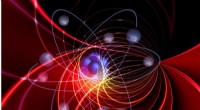
* Moving charged particles: Even individual moving charged particles, like electrons, create magnetic fields.
2. Magnetic Fields Interact with Other Moving Charges:
* Force on moving charges: A magnetic field exerts a force on other moving charges within it. The direction of this force is perpendicular to both the magnetic field and the direction of the moving charge.
* Right-hand rule: The right-hand rule helps determine the direction of the force. Imagine pointing your thumb in the direction of the moving charge, your index finger in the direction of the magnetic field, then your middle finger will point in the direction of the magnetic force.
3. Magnetic Dipoles:
* Magnetic moments: Many materials have tiny magnetic dipoles, which are like miniature bar magnets with a north and south pole. These dipoles arise from the orbital and spin motion of electrons within the material.
* Magnetization: When these dipoles align themselves, they create a macroscopic magnetic field. This is the basis of ferromagnetism, where materials like iron become strongly magnetic.
4. Key Concepts:
* Magnetic field lines: These lines represent the direction and strength of a magnetic field. They always form closed loops and never cross each other.
* Magnetic flux: This is a measure of the number of magnetic field lines passing through a given area.
* Magnetic permeability: This describes a material's ability to allow magnetic field lines to pass through it.
* Electromagnetism: Electricity and magnetism are fundamentally intertwined. Changing magnetic fields create electric fields, and changing electric fields create magnetic fields (Faraday's Law and Ampere's Law).
Applications:
Magnetic forces have countless applications in our daily lives and technology, including:
* Electric motors: Using the interaction between magnetic fields and electric currents.
* Magnetic storage devices: Storing data on magnetic tapes and hard drives.
* Medical imaging: MRI (Magnetic Resonance Imaging) uses magnetic fields to create detailed images of the inside of the body.
* Compasses: Utilizing the Earth's magnetic field to determine direction.
Understanding magnetic forces is essential to a wide range of scientific and technological fields.