1. Electromagnetic Waves:
* Light is a form of electromagnetic radiation, meaning it travels as waves of oscillating electric and magnetic fields.
* These fields are perpendicular to each other and to the direction of the wave's travel.
2. Speed of Light:
* In a vacuum, light travels at an incredible speed: approximately 299,792,458 meters per second (186,282 miles per second). This is often rounded to 300,000,000 m/s for simplicity.
* This speed is represented by the letter 'c' in physics.
3. Through Different Media:
* When light passes through different materials (like air, water, or glass), it slows down.
* The amount of slowing depends on the material's refractive index.
* This change in speed can cause light to bend, a phenomenon called refraction.
4. Straight Lines:
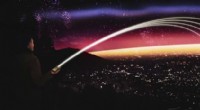
* In a uniform medium (like air), light travels in straight lines. This is why we see sharp shadows.
* However, light can be bent, reflected, and diffracted in various ways, leading to more complex light patterns.
5. Quantum Mechanics:
* At the quantum level, light also exhibits particle-like behavior.
* This is explained by the concept of photons, which are packets of light energy.
In summary:
Light moves as electromagnetic waves, traveling incredibly fast in a vacuum. It can be slowed down by different media, causing refraction. Light generally travels in straight lines, but can be bent, reflected, and diffracted.
Let me know if you have any further questions about the fascinating world of light!