* Gravity is proportional to mass: The more mass an object has, the stronger its gravitational pull. This is the fundamental principle of gravity.
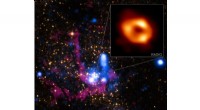
* Black holes: These are incredibly dense objects where gravity is so strong that not even light can escape. They are formed when massive stars collapse at the end of their lives. Supermassive black holes exist at the centers of most galaxies, including our own Milky Way.
* Neutron stars: These are the collapsed cores of massive stars. They are incredibly dense, packing the mass of our sun into a sphere only a few kilometers across.
* Galaxies: While individual stars within a galaxy might be massive, galaxies themselves contain billions of stars, gas, and dust, giving them enormous gravitational pull.
* Clusters of galaxies: These are groups of galaxies bound together by gravity, containing even more mass than individual galaxies.
Important to note:
* Distance also matters: While massive objects exert strong gravitational forces, the strength of that force decreases with distance. So, even though a black hole has immense gravity, its influence weakens significantly as you move further away.
* Earth's gravity: While Earth is not the most massive object, it's still significant. Its gravity holds us on the surface and keeps the moon in orbit.
So, the objects with the most gravitational force are the most massive, from black holes to galaxy clusters.