* No Physical Contact: Unlike forces like friction or normal force, which require direct contact between objects, magnetic forces can operate across a distance. For example, a magnet can attract a piece of iron even if there's air or a vacuum between them.
* Field Concept: The magnetic force is explained by the concept of a magnetic field. This field extends outward from a magnetic source (like a magnet) and permeates the surrounding space. Any object with magnetic properties within this field will experience a force.
* Interaction through Field: The magnetic field is a key intermediary. It's not the magnet directly acting on the iron, but rather the iron interacting with the magnetic field created by the magnet. This interaction causes the force.
Examples:
* Compass Needle: A compass needle aligns itself with the Earth's magnetic field, even though the needle isn't physically touching the Earth.
* Electric Motor: The rotation of a motor's armature is driven by magnetic forces between the armature and the magnetic field created by electromagnets.
It's Important to Note:
* Field Lines: While we visualize magnetic fields with field lines, these lines are a representation and don't physically exist. They are merely a tool to understand the direction and strength of the magnetic field.
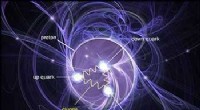
* Quantum Electrodynamics: Modern physics, specifically quantum electrodynamics, explains how magnetic forces arise from the exchange of virtual particles called photons. However, the concept of a magnetic field still provides a useful model for understanding these forces.
In essence, the magnetic force is considered action-at-a-distance because it operates through an intermediary field rather than direct contact.