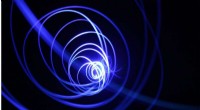
* Vibrating Object: The object itself is moving back and forth rapidly.
* Collisions: As the object vibrates, it bumps into the particles of the surrounding medium (like air, water, or a solid material).
* Energy Transfer: These collisions transfer energy from the vibrating object to the particles.
* Chain Reaction: The particles that gain energy start to vibrate themselves, bumping into their neighboring particles, and so on. This creates a chain reaction of vibrations that spreads through the medium.
Think of it like this: Imagine dropping a pebble into a still pond. The ripple that spreads outwards is a similar effect. The pebble's impact creates vibrations (waves) in the water, which then travel outward.
The type of vibration and the properties of the medium affect how the vibrations spread. For example:
* Sound: Vibrating objects create sound waves that travel through the air. The frequency of the vibrations determines the pitch of the sound.
* Heat: Vibrating atoms and molecules in a substance transfer energy as heat.
* Seismic waves: Vibrations caused by earthquakes travel through the Earth's crust.
Overall, a vibrating object acts as a source of energy, causing the particles around it to vibrate and transfer that energy throughout the medium.