Here's how it works:
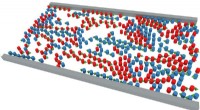
* Heat energy is transferred from a warmer object to a cooler object. This happens because the molecules in the warmer object have more kinetic energy (they vibrate more rapidly) and collide with the molecules in the cooler object, transferring some of their energy.
* The transfer continues until both objects reach the same temperature. This is a state of thermal equilibrium.
Examples of conduction:
* Touching a hot stovetop: Heat is conducted from the stove to your hand, causing a burn.
* Heating a pot on the stove: Heat is conducted from the stovetop to the pot, then from the pot to the water inside.
* Holding a hot cup of coffee: Heat is conducted from the cup to your hand, making it feel warm.
Conduction is most efficient in solids, where molecules are closely packed. It's less efficient in liquids and gases, where molecules are more spread out.