1. Classical Physics:
* Mechanics: The study of motion, forces, and energy. This includes topics like:
* Kinematics: Describing motion without considering its causes.
* Dynamics: Analyzing the causes of motion, like forces and torques.
* Statics: The study of objects at rest.
* Electromagnetism: The study of electric and magnetic fields and their interactions. This includes:
* Electricity: The study of electric charges and currents.
* Magnetism: The study of magnetic fields and their effects.
* Thermodynamics: The study of heat and its relationship to other forms of energy. This includes:
* Heat Transfer: The study of how heat flows.
* Statistical Mechanics: Using probability to understand the behavior of large systems.
* Optics: The study of light and its behavior, including:
* Wave Optics: Understanding light as a wave.
* Geometric Optics: Describing light using rays.
* Acoustics: The study of sound and its properties.
2. Modern Physics:
* Relativity: Developed by Albert Einstein, it describes the universe at very high speeds and strong gravitational fields. This includes:
* Special Relativity: Deals with the relationship between space and time.
* General Relativity: Describes gravity as a curvature of spacetime.
* Quantum Mechanics: Deals with the behavior of matter and energy at the atomic and subatomic level. This includes:
* Quantum Field Theory: A framework combining quantum mechanics and special relativity.
* Atomic Physics: Studies the structure and properties of atoms.
* Nuclear Physics: Studies the structure and behavior of atomic nuclei.
* Particle Physics: Investigates the fundamental particles and their interactions.
* Astrophysics: Studies celestial objects and phenomena, using physics to understand stars, galaxies, and the universe.
3. Other Branches:
* Condensed Matter Physics: Studies the properties of materials in their condensed states (solids and liquids).
* Biophysics: Applies physics principles to biological systems.
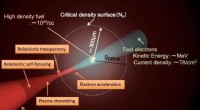
* Plasma Physics: Studies the behavior of ionized gases.
* Computational Physics: Uses computers to model and analyze physical systems.
It's important to note that these categories aren't strict divisions. There are many overlaps and connections between different branches of physics. The field is constantly evolving, and new subfields and interdisciplinary areas are emerging all the time.