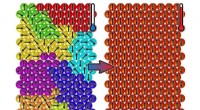
Friction is a force that opposes the relative motion or tendency of motion between two surfaces in contact. It arises from the microscopic irregularities and intermolecular forces present between the surfaces.
Key aspects of friction:
* It's always a contact force: Friction requires physical contact between two surfaces.
* It opposes motion: Friction acts to resist any movement or attempted movement between the surfaces.
* It depends on the nature of the surfaces: Rougher surfaces have higher friction than smoother surfaces.
* It's a non-conservative force: Friction dissipates energy as heat, meaning energy is lost in the process.
Imagine a book resting on a table.
* Static friction: The book is at rest, so there's no relative motion between the book and the table. The force of static friction is equal and opposite to any force you might apply to the book, trying to move it. This friction keeps the book stationary until you apply a force stronger than the static friction.
* Kinetic friction: Once you apply a force strong enough to overcome static friction, the book starts moving. The force of kinetic friction now acts on the book, opposing its motion and making it harder to slide across the table.
* Normal force: The force with which the table pushes back on the book, equal in magnitude and opposite in direction to the book's weight. This force influences the magnitude of the friction force.
In this illustration:
* The book represents one surface.
* The table represents the other surface.
* The force you apply represents the external force trying to initiate or maintain motion.
* The static and kinetic friction are the forces that oppose the motion of the book.
This simple scenario illustrates the fundamental nature of friction as a force that opposes motion between surfaces in contact.
Beyond this basic explanation, there are several different types of friction:
* Static friction: The force that opposes the initiation of motion between two surfaces at rest.
* Kinetic friction: The force that opposes the motion of two surfaces already in contact.
* Rolling friction: The force that opposes the motion of a rolling object, caused by the deformation of the rolling surface.
* Fluid friction: The force that opposes the motion of an object through a fluid (like air or water).
Understanding friction is essential for comprehending various phenomena in everyday life and in various fields like engineering and physics.