Here's a breakdown of key points:
* Causes change in motion: Forces can start an object moving, stop it, speed it up, slow it down, or change its direction.
* Vector quantity: Force has both magnitude (how strong it is) and direction.
* Measured in Newtons (N): The standard unit for force is the Newton.
* Examples of forces:
* Gravity: The force that pulls objects towards each other.
* Friction: The force that opposes motion between two surfaces in contact.
* Normal force: The force that a surface exerts on an object resting on it.
* Applied force: A force applied directly to an object, like pushing or pulling.
* Tension: The force transmitted through a string, cable, or similar object.
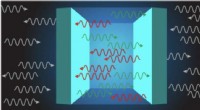
* Electromagnetic force: The force responsible for all electromagnetic interactions, including electricity, magnetism, and light.
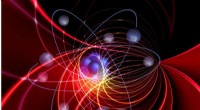
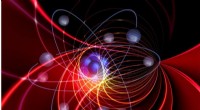
* Nuclear forces: The forces that hold the nucleus of an atom together.
Key concepts related to force:
* Newton's Laws of Motion: These laws describe the relationship between force, mass, and motion.
* Work and Energy: Force is related to work and energy. Work is done when a force causes an object to move a distance.
* Momentum: The momentum of an object is its mass times its velocity. Forces can change an object's momentum.
Understanding the concept of force is essential in various fields of science, including physics, engineering, and astronomy.