Acceleration is about *change* in velocity, not just speed.
* Speed is how fast an object is moving. It's a scalar quantity, meaning it only has magnitude (e.g., 20 miles per hour).
* Velocity is speed *and* direction. It's a vector quantity, meaning it has both magnitude and direction (e.g., 20 miles per hour *eastward*).
Therefore, an object can have a constant speed but still be accelerating if its direction is changing.
Here are some examples:
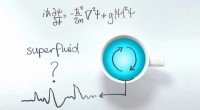
* An object moving in a circle at a constant speed: The speed might be constant, but the direction of motion is continuously changing, resulting in a centripetal acceleration towards the center of the circle.
* A car turning a corner: The car might maintain its speed, but its direction changes, resulting in acceleration.
* A ball thrown upwards: As the ball rises, its upward speed decreases until it momentarily stops at the highest point. Then, it accelerates downwards due to gravity.
Key Point: Acceleration describes how the velocity of an object is changing over time. It doesn't necessarily mean the object is speeding up. It can also mean it's slowing down or changing direction.