Understanding Dielectric Constants
* Dielectric Constant (k): A dielectric constant is a measure of a material's ability to reduce the electric field strength between charges. It represents the factor by which the electric field is reduced compared to a vacuum. Air has a dielectric constant very close to 1, meaning it has little effect on the electric field.
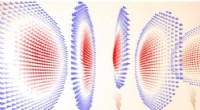
* Polarization: When a dielectric material is placed in an electric field, its molecules become polarized. This means the positive and negative charges within the molecules align themselves in response to the field, effectively reducing the strength of the field inside the material.
The Impact on Force
* Coulomb's Law: The force between two charges is given by Coulomb's Law:
* F = k * (q1 * q2) / r²
* Where:
* F is the force
* k is Coulomb's constant (8.98755 × 10⁹ N⋅m²/C²)
* q1 and q2 are the magnitudes of the charges
* r is the distance between the charges
* Dielectric Constant's Role: When a dielectric material is present, Coulomb's Law is modified:
* F = (k / k') * (q1 * q2) / r²
* Where k' is the dielectric constant of the material.
* Reduced Force: Since k' is greater than 1 for most dielectric materials, the force of attraction between the charges decreases when the dielectric material is present. The reduction in force is directly proportional to the dielectric constant.
In Summary
When air is replaced by a dielectric medium with a constant k, the maximum force of attraction between two charges separated by a distance decreases by a factor of k. This is because the dielectric material reduces the electric field strength between the charges due to polarization.