Mechanics & Motion:
* Building a Simple Pendulum: Explore the relationship between pendulum length and period. Investigate how factors like mass, air resistance, and amplitude affect the period.
* Projectile Motion Experiment: Use a projectile launcher to investigate the trajectory of projectiles, factoring in initial velocity, launch angle, and air resistance.
* Collision Dynamics: Design an experiment using collisions (e.g., marbles, toy cars) to explore conservation of momentum and energy.
* Rolling Friction: Investigate the factors that affect rolling friction in different objects (wheels, spheres).
* Simple Harmonic Motion (SHM): Construct a model of a spring-mass system or a pendulum and study its SHM behavior. Measure the period and amplitude of oscillations.
Waves & Optics:
* Diffraction of Light: Observe the diffraction patterns created by passing light through narrow slits or around objects. Explore how the pattern changes with different wavelengths.
* Interference of Light: Set up a Young's Double Slit experiment to demonstrate interference patterns. Explore how the pattern changes with different slit widths and wavelengths.
* Polarization of Light: Investigate the properties of polarized light using polarizing filters. Explore how polarized light interacts with different materials.
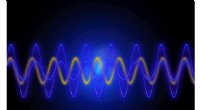
* Sound Wave Interference: Experiment with sound waves to demonstrate constructive and destructive interference. Investigate how the patterns change with different frequencies and distances.
* Doppler Effect: Investigate the Doppler effect by creating a simple experiment using a moving sound source (e.g., a speaker on a moving object).
Electricity & Magnetism:
* Electromagnetism: Build an electromagnet using a coil of wire and investigate how the strength of the magnet is affected by current, number of turns, and core material.
* DC Circuit Analysis: Design and build a simple DC circuit with resistors, capacitors, and an LED. Measure current and voltage across different components.
* AC Circuit Analysis: Explore the behavior of AC circuits with capacitors, inductors, and resistors. Investigate the concepts of reactance, impedance, and resonance.
* Electromagnetic Induction: Investigate Faraday's Law by creating a simple demonstration of electromagnetic induction. Measure the induced voltage in a coil as it moves through a magnetic field.
* Measuring Earth's Magnetic Field: Design an experiment using a compass and other materials to measure the strength and direction of Earth's magnetic field at your location.
Heat & Thermodynamics:
* Specific Heat Capacity of Materials: Measure the specific heat capacities of different materials (e.g., water, metal) using a calorimeter.
* Thermal Conductivity of Materials: Design an experiment to compare the thermal conductivity of different materials. Explore the concept of heat transfer.
* Heat Transfer by Convection: Investigate how heat is transferred by convection using a simple experiment with water and a heat source.
* Heat Transfer by Radiation: Explore the properties of infrared radiation and how it relates to heat transfer.
* Entropy and Disorder: Design an experiment to illustrate the concept of entropy. For example, investigate the change in entropy during a melting or freezing process.
Nuclear Physics:
* Radioactive Decay: Research and model radioactive decay using a simulation or experiment with Geiger counter (if available).
* Half-life of Radioactive Isotopes: Explore the concept of half-life by examining the decay of a radioactive isotope (using simulation or data from a real experiment).
* Nuclear Fission and Fusion: Investigate the energy released during nuclear fission and fusion reactions. Explore the concepts of nuclear binding energy and chain reactions.
Important Considerations:
* Safety: Always prioritize safety in your experiments. Consult with your teacher or a lab instructor for guidance.
* Resources: Consider what materials and equipment are available to you at school or at home.
* Complexity: Choose a project that is challenging but manageable within the time frame and resources available.
* Creativity: Feel free to modify or expand on the ideas presented above. Explore your own interests and come up with a unique and interesting project.
Have fun exploring the wonders of physics!