1. By Scale:
* Classical Mechanics: Deals with the motion of macroscopic objects (think everyday objects, planets, etc.).
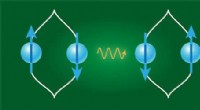
* Quantum Mechanics: Deals with the behavior of matter and energy at the atomic and subatomic level.
* Astrophysics: Studies celestial objects and phenomena, from planets and stars to galaxies and the universe as a whole.
2. By Fundamental Forces:
* Classical Mechanics: This encompasses a broader category, including fields like mechanics, heat, and sound, which are often studied at the macroscopic level.
* Electromagnetism: Deals with electric and magnetic phenomena and their interactions.
* Weak Nuclear Force: Governs radioactive decay and certain particle interactions.
* Strong Nuclear Force: Binds protons and neutrons together within the atomic nucleus.
* Gravity: The force that governs the attraction between objects with mass.
3. By Field of Study:
* Thermodynamics: The study of heat and its relation to other forms of energy.
* Optics: The study of light and its interactions with matter.
* Acoustics: The study of sound and its properties.
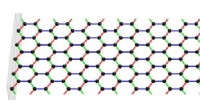
* Atomic Physics: The study of atoms and their interactions.
* Nuclear Physics: The study of the nucleus of the atom and its properties.
* Particle Physics: The study of the fundamental particles that make up matter.
4. By Application:
* Biophysics: Applies physics principles to biological systems.
* Geophysics: Applies physics to study the Earth.
* Engineering Physics: Applies physics to design and develop technologies.
* Medical Physics: Applies physics principles to medical imaging and treatment.
Remember, these are just some examples, and the boundaries between these divisions are often blurred. Many areas of physics overlap and build upon each other, making it a truly interconnected field.