Theoretical Tools:
* Mathematics: This is the language of physics, used to model and describe natural phenomena.
* Logic and Reasoning: Physicists use these to develop and test theories, drawing conclusions from observations and experiments.
* Computer Modeling and Simulation: Used to study complex systems and phenomena that are difficult or impossible to replicate in the lab.
Practical Tools:
* Laboratory Equipment: A broad category including:
* Microscopes: To view tiny objects.
* Telescopes: To view distant objects in space.
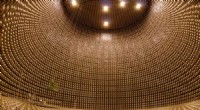
* Particle Accelerators: To study the fundamental particles of matter.
* Spectrometers: To analyze light and identify elements.
* Lasers: For precise measurement and manipulation of matter.
* Sensors: To detect and measure various physical quantities like temperature, pressure, magnetic fields, etc.
* Instrumentation and Measurement Devices: These help physicists collect data and make precise measurements.
* Data Analysis and Visualization Software: To organize, analyze, and interpret experimental data.
Other Important Aspects:
* Collaboration: Physics is often a collaborative endeavor, with scientists working together to solve problems.
* Critical Thinking and Problem-Solving: These are essential skills for physicists to develop new theories and make sense of experimental results.
Ultimately, the "major tool" depends on what area of physics you're interested in. For example, a cosmologist might rely heavily on computer models, while a particle physicist might rely on particle accelerators.
What specific area of physics are you interested in? I might be able to give you more tailored advice!