However, the speed of light can change when it travels through a medium other than a vacuum. Factors that affect the speed of light in a medium include:
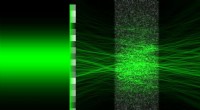
* Refractive index of the medium: This is a measure of how much the speed of light is reduced in a particular medium compared to its speed in a vacuum. Higher refractive index means slower speed of light. For example, light travels slower in water than in air.
* Density of the medium: Denser mediums have higher refractive indices, leading to slower light speeds.
* Wavelength of light: Different wavelengths of light (different colors) travel at slightly different speeds in the same medium. This phenomenon is known as dispersion.
* Temperature of the medium: Temperature can affect the density and refractive index of the medium, hence influencing the speed of light.
Important Note: The speed of light in a vacuum is always constant, regardless of the observer's motion or the source of light. This is one of the fundamental principles of special relativity.