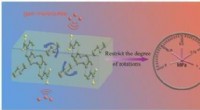
* Neutral State: In a neutral object, the positive charges (protons) and negative charges (electrons) are evenly distributed.
* Electric Field: When an electric field is applied to the object, it exerts a force on the charges. Since electrons are free to move within the object, they are attracted towards the positive end of the electric field and repelled from the negative end.
* Polarization: This movement of electrons results in a concentration of negative charge at one end of the object and a concentration of positive charge at the other end. This is called polarization.
Examples of Polarization:
* Dielectric Materials: When a dielectric material is placed in an electric field, its electrons shift slightly, creating a dipole moment. This is how capacitors work.
* Conductors: In conductors, electrons are free to move more readily. When a conductor is placed in an electric field, the electrons move freely towards the positive end, creating a large separation of charges. This is the principle behind how lightning rods work.
Factors Influencing Polarization:
* Strength of the Electric Field: A stronger electric field will cause a greater separation of charges.
* Material Properties: Different materials have different abilities to polarize. Materials with loosely bound electrons are more easily polarized.
Applications of Polarization:
* Capacitors: Polarization is the fundamental principle behind how capacitors store electrical energy.
* Electrostatic Paint Spraying: The polarization of paint droplets allows them to be attracted to the negatively charged surface of the object being painted, resulting in more even coverage.
* Lightning Protection: Lightning rods utilize polarization to attract lightning strikes and safely direct them to the ground.
Let me know if you'd like to explore a specific example in more detail!