Here's the breakdown:
What is Brownian Motion?
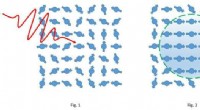
Brownian motion is the random movement of particles suspended in a fluid (like water or air) as they are bombarded by the molecules of the fluid. This phenomenon was first observed by Robert Brown in 1827.
Einstein's Contribution
In 1905, Einstein published a paper titled "On the Movement of Small Particles Suspended in a Stationary Liquid Required by the Molecular-Kinetic Theory of Heat." In this paper, he provided a theoretical explanation for Brownian motion based on the following key concepts:
1. Atomic and Molecular Theory: Einstein used the atomic and molecular theory to explain that the fluid is made up of constantly moving molecules.
2. Collisions and Randomness: He argued that the suspended particles are constantly bombarded by the molecules of the fluid, leading to random collisions. These collisions cause the particles to move in a random, erratic way.
3. Diffusion and Statistical Mechanics: Einstein linked Brownian motion to the concept of diffusion. He showed that the average displacement of a particle over time is related to the diffusion coefficient, which in turn is determined by the viscosity of the fluid and the size of the particle.
Einstein's Explanation Supported the Existence of Atoms
Einstein's explanation of Brownian motion provided strong evidence for the existence of atoms and molecules, which was a controversial topic at the time. His work helped to solidify the atomic theory of matter.
Key Points
* Einstein did not invent the idea of Brownian motion; he provided a theoretical explanation for it.
* His explanation was based on the atomic and molecular theory and statistical mechanics.
* He showed that the random movement of particles was caused by collisions with the molecules of the fluid.
* His work provided strong evidence for the existence of atoms.
Einstein's work on Brownian motion was groundbreaking because it helped to bridge the gap between the macroscopic world of everyday experience and the microscopic world of atoms and molecules. It was a significant contribution to the development of modern physics.