Too Big
* Equations:
* Einstein's Field Equations: These describe the behavior of gravity and the structure of the universe. They are used to model the evolution of the universe, including black holes and the expansion of space itself.
* Equations for Galactic Dynamics: These equations describe the motion of stars and gas within galaxies, helping us understand the structure and evolution of these vast systems.
* Physical Objects:
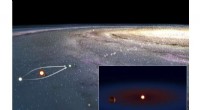
* Galaxies: While we can see some aspects of galaxies through telescopes, their full scale and complexity are impossible to directly observe due to their immense size.
* Nebulae: These massive clouds of gas and dust are too large to be seen in their entirety from Earth.
Too Small
* Equations:
* Schrödinger Equation: This equation describes the behavior of quantum particles, such as electrons, at the atomic and subatomic level. It is too small to be directly observed using traditional microscopes.
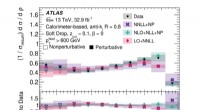
* Standard Model of Particle Physics: This model describes all known fundamental particles and forces. Many of these particles are too small to be directly observed even with the most powerful particle accelerators.
* Physical Objects:
* Atoms: While we can use microscopes to see some structures within atoms, the individual components (protons, neutrons, and electrons) are far too small to directly observe.
* Quarks: These are fundamental particles that make up protons and neutrons. They are extremely small and can only be studied indirectly through particle collisions.
Too Fast
* Equations:
* Special Relativity: This theory describes the behavior of objects moving at speeds close to the speed of light. It is too fast to directly observe, as the time dilation and length contraction effects become significant.
* Physical Objects:
* Cosmic Rays: These high-energy particles travel at nearly the speed of light and are too fast to directly observe.
Too Slow
* Equations:
* Equations for Radioactive Decay: These equations describe the slow decay of radioactive isotopes, a process that can take thousands or millions of years.
* Equations for Plate Tectonics: These equations describe the slow movement of Earth's tectonic plates, which takes place over millions of years.
* Physical Objects:
* Continental Drift: The slow movement of continents across the Earth's surface is too gradual to be directly observed in a human lifetime.
* Glacial Erosion: The slow carving of landscapes by glaciers is a process that occurs over thousands or even millions of years.
Important Note:
While we cannot directly observe these things, we use a variety of indirect methods, including:
* Mathematical models and equations: These allow us to simulate and predict the behavior of these objects and phenomena.
* Telescopes and microscopes: These instruments allow us to observe these objects in greater detail than we could with the naked eye.
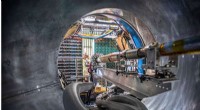
* Particle accelerators: These machines accelerate particles to high speeds, allowing us to study their interactions and properties.
* Observing indirect effects: We can study the effects of these objects and phenomena on other things, such as the bending of light around black holes or the movement of tectonic plates.