What waves do:
* Propagate energy: Waves carry energy from one point to another. Think of a pebble dropped in a pond – the energy of the impact spreads outwards as ripples.
* Oscillate particles: The particles of the medium oscillate (move back and forth) around their equilibrium positions. They don't travel with the wave, they just vibrate.
What waves don't do:
* Transfer matter: The medium itself does not travel with the wave. For example, when a sound wave travels through air, the air molecules themselves don't travel from your mouth to your ear, they just vibrate in place.
Types of Waves and Mediums:
* Mechanical Waves: These require a medium to travel. Examples:
* Sound waves: Travel through air, water, solids.
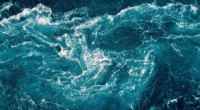
* Water waves: Travel on the surface of water.
* Seismic waves: Travel through the Earth's crust.
* Electromagnetic Waves: These do not require a medium and can travel through a vacuum. Examples:
* Light waves: Travel through space.
* Radio waves: Used for communication.
Analogy:
Imagine a line of people holding hands and shaking their hands up and down. The wave of hand movements travels down the line, but the people themselves don't move from their positions. This is analogous to how wave motion works.
Key takeaway:
While waves can create the appearance of movement, they don't actually transport the medium. They transfer energy through the medium by causing its particles to oscillate.