1. Light and Speed:
* Light travels at different speeds in different mediums. For example, light travels faster in air than it does in water or glass.
2. The Change in Direction:
* When light passes from one medium to another (like from air to water), its speed changes. This change in speed causes the light to bend, or refract.
* The amount of bending depends on the difference in speed between the two mediums and the angle at which the light enters.
3. Snell's Law:
* This law mathematically describes the relationship between the angle of incidence (the angle at which light enters the medium), the angle of refraction (the angle at which light bends), and the indices of refraction of the two mediums.
How Objects Bend Light:
* Transparent Objects: Objects like glass, water, and air allow light to pass through them. The bending of light as it enters and exits these objects creates a different path for the light, making the object appear shifted or distorted. This is why objects appear to be bent when they are submerged in water.
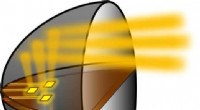
* Curved Surfaces: Curved surfaces like lenses (in eyeglasses or cameras) are designed to focus light. The curvature of the surface causes different rays of light to bend at different angles, converging or diverging them. This bending creates images that are either magnified or reduced, depending on the lens's shape.
* Other Phenomena:
* Diffraction: Light can also bend around the edges of objects, causing a spreading of the light waves. This is why we can see the shadow of a small object even when the light source is far away.
* Scattering: When light passes through a medium with particles, the light can be scattered in different directions. This is why the sky appears blue - the air scatters blue light more effectively than other colors.
In summary, objects bend light by changing the speed of light as it travels through different mediums. This change in speed causes the light to refract, leading to the effects we observe, like the bending of a straw in water or the focusing of light by a lens.