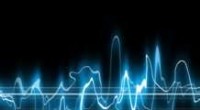
* Periodic Waveform: A sound wave that repeats itself over time. Think of a guitar string vibrating.
* Frequency: How often the wave repeats itself per second, measured in Hertz (Hz).
* Fundamental Frequency: The simplest, slowest vibration of the waveform. It's the frequency you hear most prominently in a sound.
Examples:
* Musical Instruments: When you play a note on a piano or guitar, the fundamental frequency is the main note you hear.
* Voice: When you speak, your vocal cords produce a fundamental frequency, which determines the pitch of your voice.
Harmonics:
The fundamental frequency isn't the only frequency present in a sound. It's often accompanied by harmonics, which are frequencies that are multiples of the fundamental frequency. These harmonics create the richness and complexity of the sound.
Importance:
The fundamental frequency is crucial in:
* Music: It's the basis for musical scales and chords.
* Speech Recognition: Our brains use fundamental frequency to distinguish between different speakers and emotions in speech.
* Sound Engineering: Understanding fundamental frequencies is vital for mixing and mastering audio.
In essence, the fundamental frequency is the foundation of any periodic sound, providing its core pitch and character.