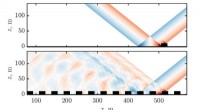
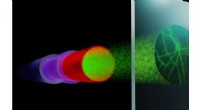
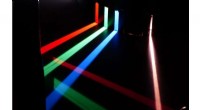
* Reflection: The light rays bounce off the surface.
* Specular: The reflected rays are all parallel to each other, creating a clear, mirror-like image.
* Smooth Surface: This is key. A smooth surface, like a polished mirror or still water, reflects light rays in a predictable and organized way.
Here's an analogy:
Imagine throwing a ball at a wall.
* Rough wall: The ball bounces off in many different directions, creating a scattered effect.
* Smooth wall: The ball bounces off in a predictable way, bouncing back at the same angle it hit the wall.
Consequences of Specular Reflection:
* Images: Smooth surfaces allow us to see reflections, forming images.
* Shine: Shiny objects reflect light specularly, making them appear bright and shiny.
* Mirrors: Mirrors are designed for specular reflection, allowing us to see our own image.
Important Note: Even the smoothest surfaces have some degree of roughness at the microscopic level. This causes some scattering of light, which is why even mirrors aren't perfectly reflective.