Here are some key concepts related to conservation in physics:
Fundamental Conservation Laws:
* Conservation of Energy: The total energy of an isolated system remains constant. Energy can be transformed from one form to another (e.g., kinetic to potential energy), but the total amount always stays the same.
* Conservation of Momentum: The total momentum of an isolated system remains constant. Momentum is a measure of an object's mass in motion. In collisions, the total momentum before the collision equals the total momentum after the collision.
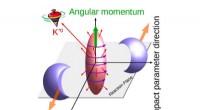
* Conservation of Angular Momentum: The total angular momentum of an isolated system remains constant. Angular momentum is a measure of an object's tendency to rotate. This principle explains why spinning objects, like ice skaters, can increase their rotation speed by pulling their arms in.
* Conservation of Charge: The total electric charge of an isolated system remains constant. Charge can be transferred between objects, but the overall amount of positive and negative charge always remains balanced.
* Conservation of Mass: In classical mechanics, mass is generally considered to be conserved. However, in nuclear reactions, mass can be converted into energy and vice versa, according to Einstein's famous equation E=mc².
Applications of Conservation Principles:
Conservation laws are fundamental principles that are used to understand and predict the behavior of physical systems. They are crucial in many areas of physics, including:
* Mechanics: Analyzing collisions, projectile motion, and the motion of rotating objects.
* Thermodynamics: Understanding heat transfer, energy conversion, and the efficiency of engines.
* Electromagnetism: Analyzing the behavior of electric charges and magnetic fields.
* Nuclear Physics: Describing nuclear reactions and radioactive decay.
Key Points to Remember:
* Isolated System: Conservation laws apply to isolated systems, meaning systems that do not exchange energy or momentum with the environment.
* Transformation: While the total value of a conserved quantity remains constant, it can be transformed from one form to another.
* Fundamental Principles: Conservation laws are among the most fundamental and widely applicable principles in physics. They provide powerful tools for understanding and predicting physical phenomena.
Understanding conservation principles is essential for comprehending a wide range of physical phenomena and building a solid foundation in physics.